
Healthcare Design Trends | Week 11

Carolyn BaRoss, an interior designer specializing in healthcare design at Perkins+Will, says that "Health systems are considering ways to strengthen brand identity across multiple locations and how to attract patients" Most healthcare facilities start with minimal colors, textures, and designs to relieve stress and keep patients calm. Then fun design elements are introduced to enhance the experience and promote happiness. It is obvious that pediatrics has been doing this for a long time and has arguably, "perfected" it. More health care facilities are introducing more exciting design elements everyday to both brand themselves and also create a fun and happy atmosphere.
Making Bold Moves In Healthcare Aesthetics
A waiting area in China, uses the familiar and comforting idea of a Chinese garden, to create a feeling of calmness and serenity. Natural colors and textures, along with soft lighting add to the feeling of simplicity and safety.
Making Bold Moves In Healthcare Aesthetics
A medical center in California uses textured, brightly colored wall accents to add excitement to their walls.
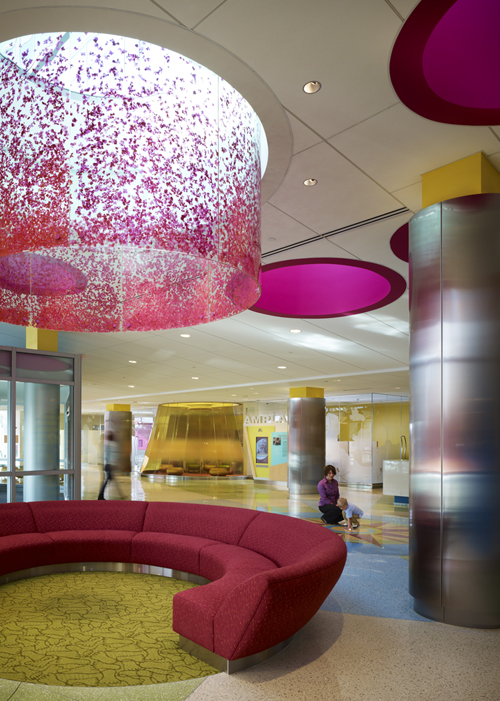
Image result for healthcare design trends
Bright, cold, and unique lighting trends in Healthcare have really started to make an appearance in the last few years.


https://www.healthcaredesignmagazine.com/trends/designers-make-bold-moves-in-healthcare-aesthetics/#slide-6
https://mcdmag.com/2013/03/healthcare-lighting-trends-from-hospital-to-hospitality-to-innovating-with-leds/#.W93Ioi2ZN-U


Comments

Popular posts from this blog

Hospitality Design Trends | Week 12

Hospitality design trends are all centered around the comfort and convenience of the guests. There is also an essence of "escapism" that designers are trying to evoke within a hospitality space. Guests want to get away from real life and want to have many amenities that will allow them to relax. In this hotel reception area, a massive green wall is the focal point. Green walls have become a trend in all areas of design, not just hospitality, as they create a feeling of being in a tropical area no matter the geographical location. In this hotel dining area, the gold metals and bright blue leather make a statement. This high end, classic looking dining room is another example of escaping the ordinary to give the guests a phenomenal experience. This is an example of incorporating technology into hospitality design, which seems to be an increasingly more apparent trend. From making conference calls and meeting rooms both more accessible and high tech within hotels, to cutt...

Designing for Children | Week 10

Designing for children is a whole different clientele than the general public, just like designing for the elderly or college students. In studying specific designs for children, bright colors, room for playing and exploration, and a variety of textures are usually present.  Inclusive design for children means shorter heights for drinking fountains, sinks, toilets, door handles, and counters. Everything must be safe for children. This includes guard rails, or in some cases netting to children safe at heights. Designing for children, even in residential settings, can be both whimsical and functional. In this example, unusual shaped floating shelves, imaginative use of the lego shape, and bright upholstery work together for a fun environment to learn, play, and live in. All images from: https://www.archdaily.com/869081/18-cool-examples-of-architecture-for-kids

Education Design Trends | Week 13

When researching design trends in education, I found a very interesting article written by Pacific Office Interiors. While most of the trends are obvious, it's interesting to note these as they can creatively be taken to new heights to create truly exceptional designs. Creating collaboration spaces in an educational environment is becoming a very important trend. According to Pacific Interiors, collaborative spaces should include " seats with swivel functionality and desking that can pivot or rotate", like we see in this picture. The classroom is an ever changing environment. Here we see that it is a new trend for everything to be adaptable, and that also means mobile. Swivel chairs with appropriate ergonomic features, and module tables that can be in simple rows, or conform to the needs of the users, are both important. Finally, color and branding are a key feature in educational design. This is something we see implemented especially in universities. Not only do ...